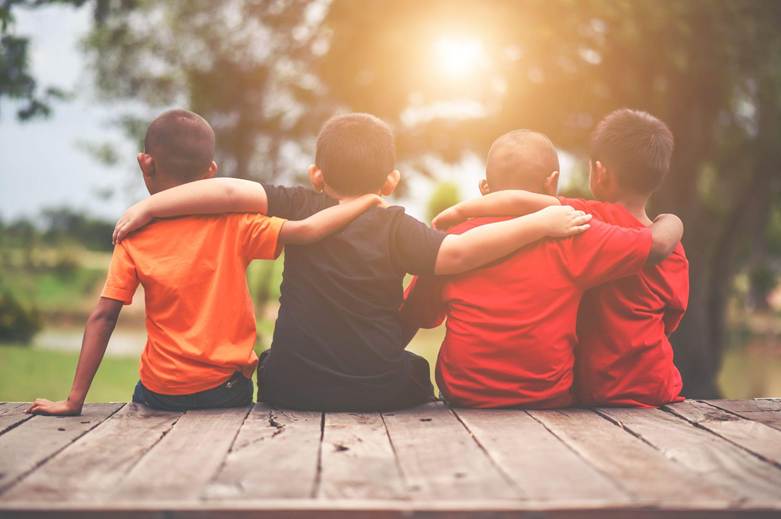
Many conversations about childhood today focus on screen time, academic achievement, or organized activities. Yet Danny Swersky suggests another trend deserves greater attention: the quiet disappearance of child-led friendships. As opportunities for independent play become less common, children are also losing valuable opportunities to build relationships without constant adult direction. When adults reflect on their childhood, many remember more than favorite games or neighborhood adventures.
They remember the people they shared those experiences with.
Friendships formed on sidewalks, playgrounds, backyards, and neighborhood streets often became the setting where children learned some of life’s most important lessons. They discovered how to cooperate, resolve disagreements, negotiate rules, include others, recover from conflict, and build trust.
Today, many of those experiences are becoming less common.
While children remain connected through schools, sports, and digital platforms, opportunities to develop friendships independently are steadily declining. Increasingly, relationships are scheduled, supervised, or structured by adults, leaving less room for children to navigate the natural social challenges that once came with unstructured play.
Friendship Is a Developmental Skill
Friendships are often viewed as pleasant additions to childhood rather than essential parts of healthy development.
In reality, they provide an important learning environment.
When children spend time together without constant adult intervention, they begin developing skills that cannot easily be taught through direct instruction.
These include:
- Resolving disagreements independently
- Understanding different perspectives
- Practicing compromise
- Building empathy
- Communicating through conflict
- Learning accountability within relationships
Unlike classroom lessons, these experiences unfold naturally.
Children negotiate the rules of a game, decide how to solve disagreements, and determine how to include new participants. Each interaction strengthens their ability to navigate future relationships.
These moments may appear ordinary, but they contribute significantly to emotional and social development.
From Neighborhood Friends to Scheduled Playdates
One of the most noticeable changes in childhood has been the shift from spontaneous friendships to highly organized social experiences.
Previous generations often found friends simply by walking outside.
Today, many children’s interactions occur through:
- Organized sports
- Extracurricular activities
- Planned playdates
- School-sponsored events
- Adult-supervised programs
These activities certainly provide valuable opportunities for connection.
However, they often differ from independent neighborhood play in one important way.
Adults typically establish the schedule, set expectations, resolve disagreements, and determine when activities begin and end.
As a result, children have fewer opportunities to manage social situations entirely on their own.
Learning to build friendships requires more than simply spending time together. It also requires practicing independence within those relationships.
Why Small Conflicts Matter
Many adults naturally step in when disagreements arise between children.
The instinct to help is understandable.
Yet not every conflict requires immediate intervention.
Minor disagreements often become valuable learning experiences when children are given appropriate space to work through them.
Questions such as:
- Who goes first?
- Which game should everyone play?
- How are rules decided?
- What happens when someone feels left out?
may seem insignificant.
In reality, these moments teach negotiation, patience, compromise, and emotional regulation.
Children begin recognizing that healthy friendships involve solving problems together rather than avoiding disagreement altogether.
When adults resolve every conflict immediately, children may lose opportunities to develop these essential interpersonal skills.
Friendship Builds Emotional Confidence
Confidence is often associated with academic success or athletic achievement.
Yet social confidence develops differently.
It grows through repeated experiences where children successfully navigate relationships on their own.
This includes:
- Introducing themselves to new peers
- Joining group activities
- Recovering after disagreements
- Apologizing when necessary
- Rebuilding trust
- Supporting friends during challenges
Each successful interaction reinforces a child’s belief that relationships can withstand occasional difficulties.
This confidence becomes increasingly valuable throughout adolescence and adulthood, where collaboration, communication, and emotional resilience influence success in nearly every environment.
The Hidden Cost of Constant Adult Direction
Adults play an essential role in creating safe environments for children.
The challenge arises when supervision gradually becomes substitution.
When adults consistently organize games, solve disputes, establish every rule, and manage every interaction, children have fewer opportunities to develop independence within their friendships.
This does not mean adults should withdraw completely.
Instead, it suggests creating appropriate opportunities where children can practice making social decisions while knowing support remains available if genuinely needed.
The objective is not less guidance.
It is more ownership.
Children often become more capable when they are trusted with responsibilities that match their developmental stage.
Rebuilding Opportunities for Independent Connection
Supporting childhood friendships does not necessarily require dramatic lifestyle changes.
Often, small adjustments create meaningful opportunities for children to build stronger relationships.
Families and communities can encourage this by:
- Allowing more unstructured outdoor play
- Creating safe neighborhood gathering spaces
- Limiting unnecessary adult intervention during minor disagreements
- Encouraging children to organize their own games
- Supporting mixed-age play when appropriate
- Prioritizing regular opportunities for face-to-face interaction
These experiences provide children with something increasingly rare: the chance to practice being socially independent.
Over time, these small moments contribute to stronger emotional resilience and healthier relationships.
Why Childhood Needs Friends, Not Just Activities
Organized activities will always play an important role in children’s development.
Sports, music, clubs, and structured learning opportunities provide valuable experiences that help children grow.
At the same time, activities should not completely replace independent friendships.
Friendships flourish when children have the freedom to create shared experiences, solve everyday problems together, and discover how relationships naturally evolve.
These interactions cannot be fully replicated through schedules or adult-led programming because their value lies in the independence they require.
Building Strong Communities Begins With Childhood
Communities are ultimately built on relationships.
Children who learn to cooperate, communicate, and build trust through independent friendships often carry those skills into adulthood. They become colleagues who collaborate, neighbors who contribute, and citizens who engage constructively with others.
The gradual disappearance of child-led friendships is therefore about more than nostalgia.
It reflects a shift in how children experience one another during some of their most formative years.
Creating more opportunities for independent connection is not simply about preserving childhood traditions. It is about helping young people develop the confidence, empathy, and relationship skills they will rely on for the rest of their lives.
Sometimes, the most important lessons children learn are not taught by adults at all. They are learned alongside friends, through the ordinary moments of play, conversation, disagreement, and discovery that quietly shape who they become.