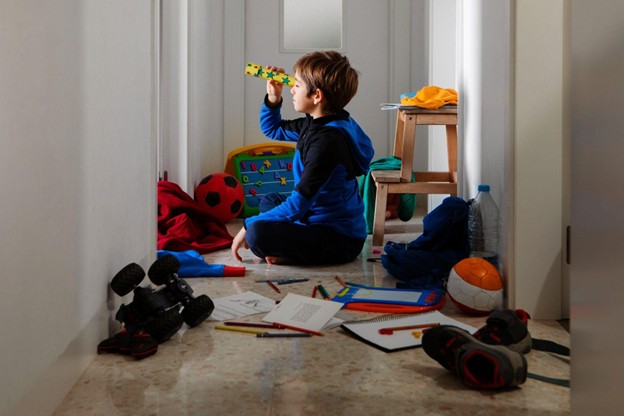
Independence is not an outcome that appears with age; it is built through repeated exposure to decision-making, and Danny Swersky frames the modern childhood environment as increasingly structured in ways that reduce those opportunities, leading to adults who are less prepared to navigate uncertainty, risk, and self-direction. The issue is not structure itself, but the degree to which it replaces rather than supports autonomy.
When every hour is planned, independence has no space to develop.
The Rise of Over-Structured Childhoods
Over the past two decades, childhood has shifted toward highly managed routines. Schedules are filled with organized activities, supervised environments, and adult-led outcomes.
This shift is driven by:
- Increased focus on achievement and performance
- Concerns around safety and risk avoidance
- Expansion of structured extracurricular programs
- Cultural pressure to optimize every developmental stage
While these intentions are often positive, the unintended consequence is reduced autonomy.
What Gets Lost When Time Is Fully Managed
When children move between structured activities, they rarely make meaningful decisions about how to use their time. This removes a critical layer of development.
Without unstructured time, children lose:
- Opportunities to initiate activities independently
- The ability to navigate boredom and create solutions
- Exposure to small, manageable risks
- Practice in resolving conflicts without adult intervention
These experiences are foundational, not optional.
Decision-Making as a Learned Skill
Independence is closely tied to decision-making. It is not something that can be taught abstractly; it must be practiced.
Children develop this skill by:
- Choosing how to spend their time
- Managing social interactions without constant guidance
- Experimenting with ideas and learning from outcomes
- Adapting when plans do not work
When these opportunities are removed, development becomes incomplete.
Why Efficiency Has Replaced Exploration
Modern systems often prioritize efficiency. Structured programs are designed to produce measurable outcomes, whether in academics, sports, or skill development.
This creates environments where:
- Adults set goals and define success
- Processes are optimized for performance
- Time is allocated with specific outcomes in mind
- Exploration is secondary to achievement
While efficient, these systems limit open-ended growth.
The Role of Free Play in Restoring Balance
Free play introduces variability, uncertainty, and choice. It allows children to operate without predefined outcomes.
This environment supports:
- Self-directed learning
- Creative problem-solving
- Social negotiation and collaboration
- Emotional resilience through trial and error
Unlike structured activities, free play adapts to the child rather than the other way around.
Why Risk Exposure Matters
Avoiding risk entirely removes the opportunity to learn how to manage it. Controlled exposure to risk is essential for building confidence and judgment.
Through independent play, children:
- Assess situations and make decisions
- Experience consequences in manageable ways
- Develop awareness of their own limits
- Build confidence through repeated success and failure
Risk, when appropriately scaled, becomes a teaching tool.
From Managed Outcomes to Personal Responsibility
In highly structured environments, responsibility often remains with adults. Instructions are given, outcomes are guided, and mistakes are minimized.
In contrast, less structured settings shift responsibility to the child:
- Choices have direct consequences
- Success is self-generated
- Failure becomes part of the learning process
- Accountability develops naturally
This transition is critical for long-term independence.
The Long-Term Impact on Adulthood
The effects of structured childhoods extend beyond early development. They influence how individuals approach challenges later in life.
Common outcomes include:
- Difficulty making decisions without external validation
- Lower tolerance for uncertainty
- Reduced confidence in unfamiliar situations
- Dependence on structured environments for direction
These patterns are not inherent traits; they are learned behaviors.
Reintroducing Autonomy Without Removing Structure
The solution is not to eliminate structure but to rebalance it. Structure can support development when it creates space for independence rather than replacing it.
This can be achieved by:
- Allowing unstructured time within daily routines
- Reducing over-scheduling of activities
- Encouraging self-initiated play
- Limiting unnecessary adult intervention
The goal is to create environments where autonomy can emerge.
Why Independence Must Be Practiced Early
Independence cannot be delayed until adolescence or adulthood. It requires years of gradual development.
Early exposure allows children to:
- Build confidence incrementally
- Develop decision-making habits
- Learn from small-scale consequences
- Adapt to increasing levels of responsibility
Without early practice, later expectations become difficult to meet.
Shifting the Definition of Productive Time
One of the challenges in modern parenting and education is redefining what counts as productive. Unstructured time is often seen as wasted time.
In reality, it is during these periods that
- Creativity develops
- Social skills are refined
- Problem-solving abilities are tested
- Personal interests begin to form
Productivity in development is not always visible.
From Control to Capability
Highly structured environments prioritize control. Independent environments prioritize capability. The distinction shapes how children grow.
Control ensures predictability, but capability ensures adaptability.
Children who experience both are better equipped to
- Navigate uncertainty
- Make informed decisions
- Take initiative in unfamiliar situations
- Build resilience through experience
This balance defines effective development.
Final Thoughts
Structured childhoods are not inherently problematic, but when structure replaces autonomy, it limits the development of independence. The absence of unstructured time reduces opportunities for decision-making, risk assessment, and self-direction.
By reintroducing free play and allowing space for independent exploration, children gain the experiences necessary to become capable, adaptable adults. Independence is not taught through instruction alone; it is built through practice, and that practice requires time, space, and trust.