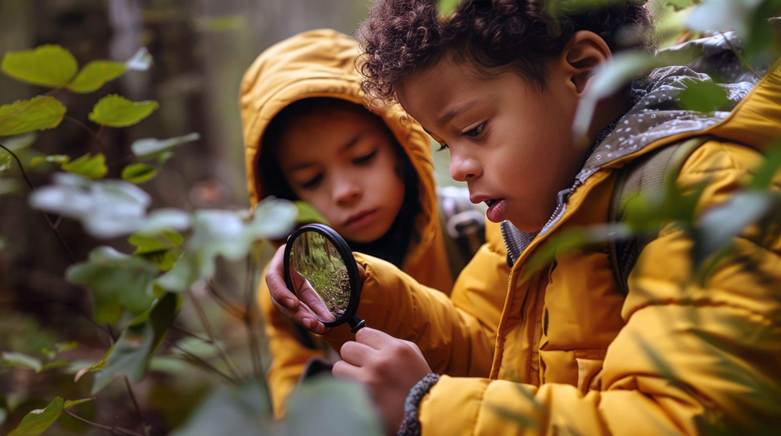
In conversations about modern education, Danny Swersky highlights how learning environments influence thinking patterns and long-term development. As digital tools become more integrated into daily routines, the role of nature-based education is gaining renewed attention, not as a rejection of technology, but as a necessary balance that supports deeper thinking, curiosity, and independence.
While screens offer access to information, they often present knowledge in structured, fast-paced formats. Nature, on the other hand, introduces variability, unpredictability, and open-ended exploration. This difference plays a critical role in how children develop cognitive flexibility and problem-solving skills.
Why Learning Environments Matter
The environment in which learning takes place shapes how information is processed and retained. Structured digital environments tend to guide attention, while natural environments encourage discovery.
- Screens deliver answers quickly, often reducing the need for sustained inquiry
- Nature presents problems without immediate solutions, encouraging exploration
- Open-ended settings allow for deeper engagement and longer attention spans
When children interact with dynamic, real-world environments, learning becomes experiential rather than purely instructional.
The Link Between Nature and Critical Thinking
Critical thinking develops through questioning, observing, and testing ideas—and nature supports this naturally by offering constantly changing conditions. Unlike structured environments, it doesn’t present fixed answers, which pushes learners to think more actively.
- Observation becomes sharper as surroundings shift and require attention to detail
- Questions arise naturally from real-world changes rather than structured prompts
- Ideas are tested through interaction, whether navigating terrain or experimenting with materials
Because outcomes aren’t predictable, learners must adapt, reflect, and adjust their thinking. This ongoing process strengthens problem-solving and builds a more flexible, independent way of thinking.
- Uneven terrain encourages physical and spatial problem-solving
- Natural elements invite experimentation and cause-and-effect learning
- Unpredictable outcomes require adaptation and flexible thinking
Unlike structured lessons, these experiences do not follow a script. They require active participation and continuous adjustment.
Curiosity as a Driver of Learning
Curiosity thrives in environments where there is freedom to explore without rigid expectations. Nature provides a setting where questions arise organically.
- Observing patterns in the environment sparks inquiry
- Interacting with natural elements encourages hands-on learning
- Freedom from rigid outcomes allows curiosity to guide exploration
This form of learning is self-directed, making it more engaging and memorable.
The Limitations of Screen-Dominated Learning
Digital tools have value, but over-reliance can limit certain aspects of development.
- Passive consumption reduces active problem-solving
- Constant stimulation can shorten attention spans
- Structured content may limit creativity and independent thinking
Balancing screen use with real-world experiences ensures that learning remains dynamic and comprehensive.
Nature as a Multi-Sensory Learning Environment
One of the key advantages of nature-based education is its ability to engage multiple senses simultaneously.
- Visual variation supports observation and pattern recognition
- Physical interaction enhances coordination and spatial awareness
- Environmental sounds and textures deepen sensory engagement
Multi-sensory experiences strengthen memory retention and cognitive connections, making learning more effective.
Building Independence Through Exploration
Nature-based learning encourages children to take initiative and navigate challenges independently.
- Exploring unfamiliar environments builds confidence
- Solving problems without immediate guidance fosters autonomy
- Managing small risks develops decision-making skills
These experiences reinforce the ability to think independently, a skill that extends beyond academic settings.
Practical Ways to Integrate Nature-Based Learning
Incorporating nature into education does not require a complete shift away from structured learning. Small, consistent changes can create a meaningful impact.
- Schedule regular outdoor learning sessions or exploratory walks
- Use natural settings for problem-solving activities and discussions
- Encourage observation-based tasks, such as identifying patterns or changes in the environment
- Allow unstructured time for exploration without predefined outcomes
These approaches create opportunities for learning that complement traditional methods.
Balancing Technology and Nature
The goal is not to eliminate technology but to create a balance that supports holistic development.
- Use digital tools for research and structured learning
- Pair screen-based lessons with real-world application
- Encourage offline exploration to reinforce concepts
This balanced approach ensures that children benefit from both innovation and experiential learning.
Long-Term Benefits of Nature-Based Education
Exposure to nature-based learning has lasting effects on both cognitive and emotional development.
- Improved problem-solving and critical thinking skills
- Greater creativity and adaptability
- Enhanced focus and reduced cognitive fatigue
- Stronger connection to the environment and community
These outcomes contribute to well-rounded development that extends into adulthood.
Conclusion
Learning beyond screens is not about rejecting technology; it is about expanding the way learning happens. Nature-based education introduces variability, challenge, and discovery, all of which are essential for developing critical thinking and curiosity.
By integrating natural environments into learning routines, it becomes possible to create experiences that are not only informative but transformative. Through exploration, observation, and independent thinking, children develop the skills needed to navigate an increasingly complex world with confidence and curiosity.