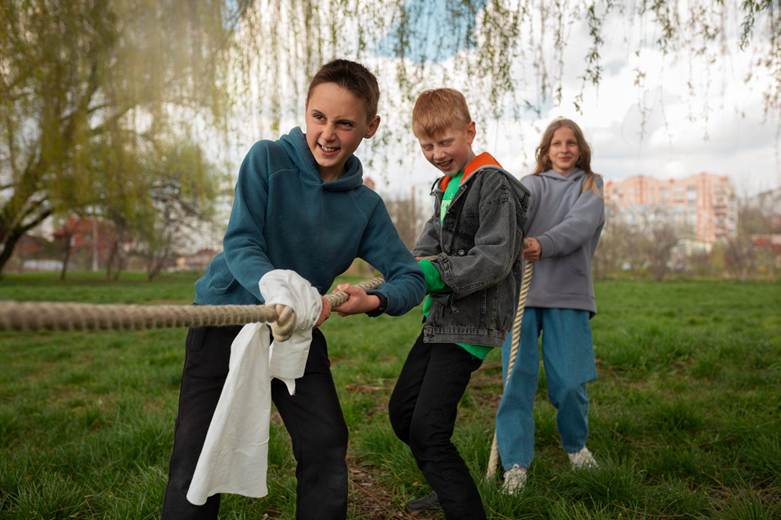
In conversations around childhood development, Danny Swersky connects the importance of independence with the need for carefully managed challenges. The ability to navigate risk in a structured yet flexible way plays a defining role in shaping resilience, confidence, and long-term adaptability in children.
Modern childhood has increasingly shifted toward safety, predictability, and supervision. While protection is essential, the absence of challenge can limit growth opportunities. Controlled challenges, situations where children encounter manageable risk, serve as critical learning environments where independence is not just encouraged but developed through experience.
Understanding the Relationship Between Risk and Growth
Risk is often misunderstood as something to avoid entirely. In reality, it exists on a spectrum. Controlled challenges introduce children to uncertainty in ways that are safe but still meaningful.
- Risk encourages decision-making and problem-solving in real time
- Exposure to uncertainty builds emotional regulation and adaptability
- Small failures provide feedback that strengthens future choices
Without these experiences, children may struggle to develop the confidence needed to handle unfamiliar situations later in life.
Why Overprotection Can Limit Development
A highly structured, risk-averse environment can unintentionally create barriers to independence. When every outcome is controlled, children have fewer opportunities to test their abilities.
- Constant supervision can reduce initiative and self-direction
- Lack of exposure to challenge may increase fear of failure
- Over-structured routines can limit creativity and exploration
Research in developmental psychology increasingly points to the importance of allowing children to encounter manageable difficulty. Growth often occurs not in perfect in moments of uncertainty.
What Controlled Challenges Look Like in Practice
Controlled challenges are not about exposing children to danger. Instead, they involve creating environments where risk is present but manageable.
- Climbing structures, outdoor play, and physical exploration
- Problem-solving tasks without immediate adult intervention
- Social situations that require negotiation and cooperation
These experiences provide opportunities to test limits, make decisions, and learn from outcomes in a supportive setting.
Building Confidence Through Experience
Confidence is not built through reassurance alone. It develops through action, repetition, and the ability to navigate both success and failure.
- Completing a challenging task reinforces a sense of capability
- Overcoming obstacles builds trust in one’s own decision-making
- Repeated exposure to manageable risk reduces fear over time
When children experience success after effort, confidence becomes internal rather than dependent on external validation.
The Role of Failure in Developing Resilience
Failure is often framed negatively, yet it is one of the most effective learning tools available. Controlled challenges allow children to experience failure in low-stakes environments.
- Mistakes provide immediate feedback for improvement
- Learning to recover from setbacks builds emotional strength
- Failure normalizes the idea that growth involves effort and adjustment
Resilience is not the absence of difficulty; it is the ability to respond constructively when difficulty arises.
Balancing Safety and Independence
Creating the right balance between safety and challenge is essential. The goal is not to eliminate risk but to guide it.
- Establish clear boundaries while allowing freedom within them
- Gradually increase levels of independence based on readiness
- Observe rather than intervene immediately, allowing problem-solving to unfold
This approach ensures that children remain safe while still benefiting from meaningful experiences.
The Long-Term Impact of Early Challenges
Early exposure to controlled challenges has lasting effects that extend into adolescence and adulthood.
- Stronger problem-solving and critical thinking skills
- Greater emotional regulation and stress management
- Increased confidence in navigating new or uncertain situations
These outcomes contribute not only to academic success but also to personal and professional growth later in life.
Practical Ways to Introduce Controlled Challenges
Incorporating controlled challenges into daily routines does not require drastic changes. Small adjustments can create meaningful opportunities for growth.
- Encourage outdoor play that involves exploration and movement
- Allow children to take the lead in age-appropriate decision-making
- Introduce tasks that require effort and persistence
- Create space for independent problem-solving before offering help
These practices shift the focus from constant protection to guided development.
The Role of Environment in Supporting Risk
The environment plays a significant role in shaping how children experience challenge.
- Natural settings encourage exploration, movement, and creativity
- Open-ended play spaces allow for experimentation and discovery
- Social environments provide opportunities for collaboration and conflict resolution
Designing environments that support controlled risk can significantly enhance developmental outcomes.
Conclusion
Risk and resilience are deeply interconnected. Shielding children from all forms of challenge may create short-term comfort but can limit long-term growth. Controlled challenges provide the space where independence, confidence, and adaptability take root.
By allowing children to engage with manageable risk, environments become more than just safe; they become transformative. Through these experiences, children learn not only how to navigate the world but also how to trust themselves within it.